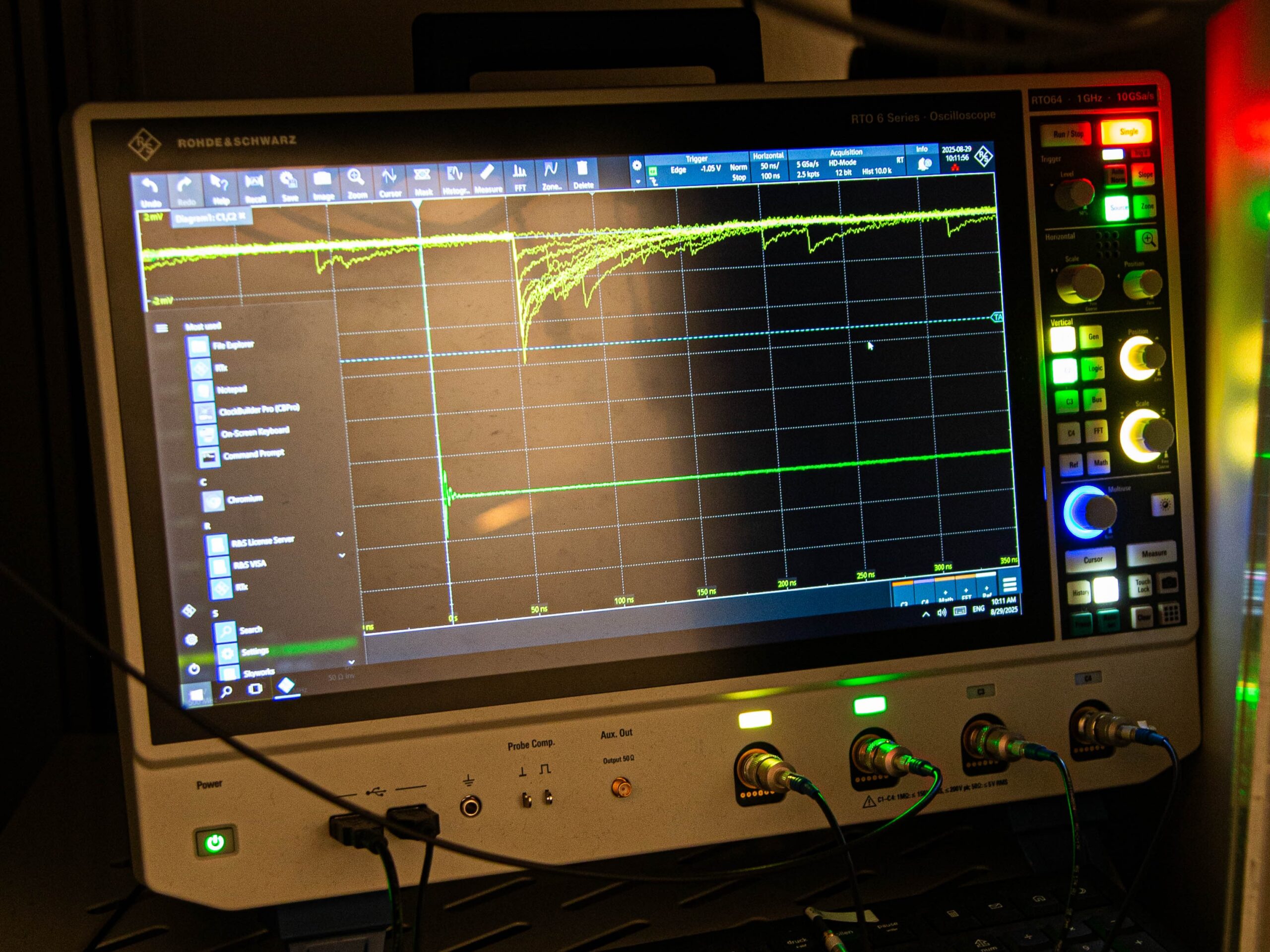
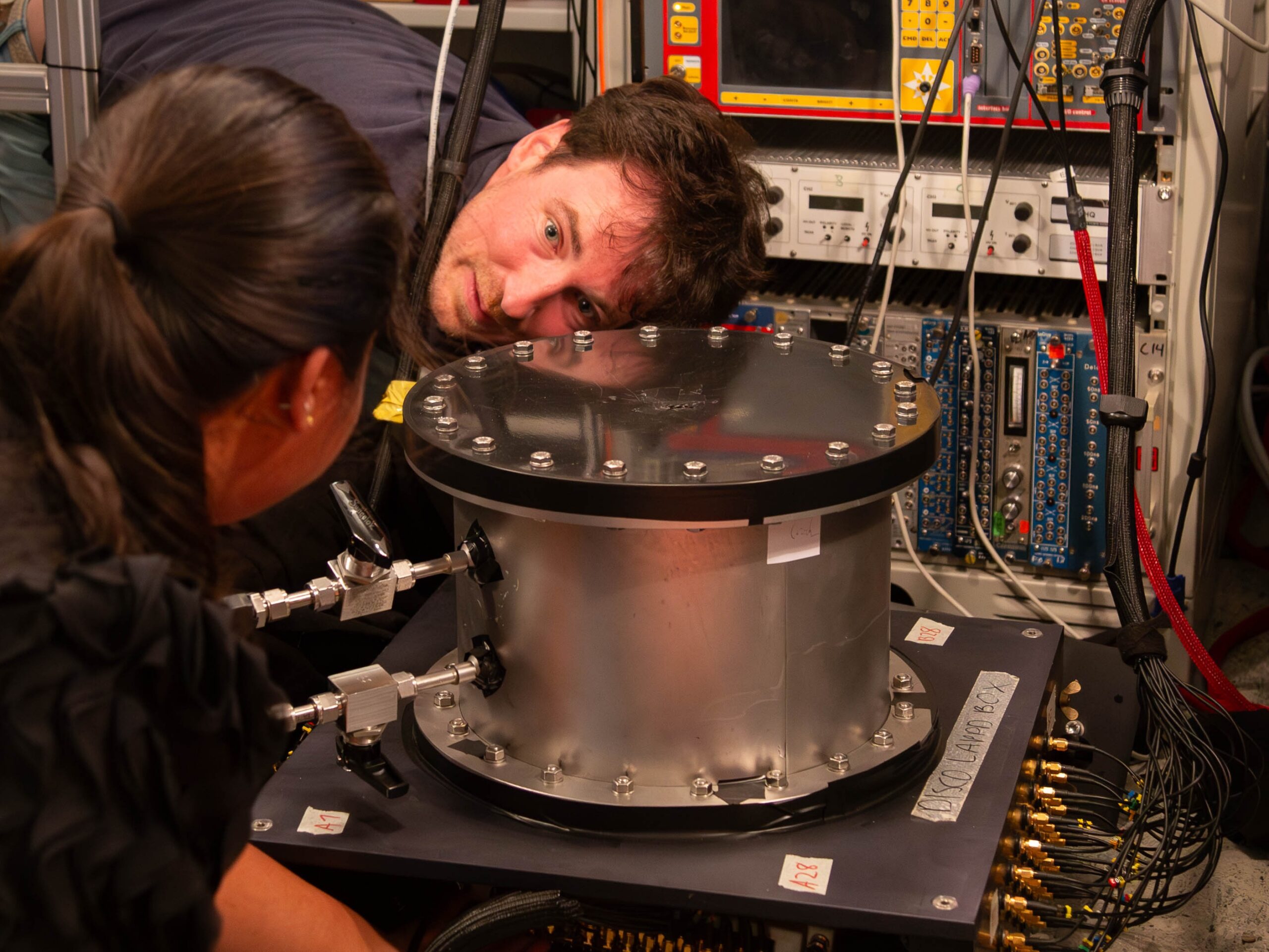
Ever wondered what our Lab looks like? Let's take you inside!
Some of our setups demand caution...
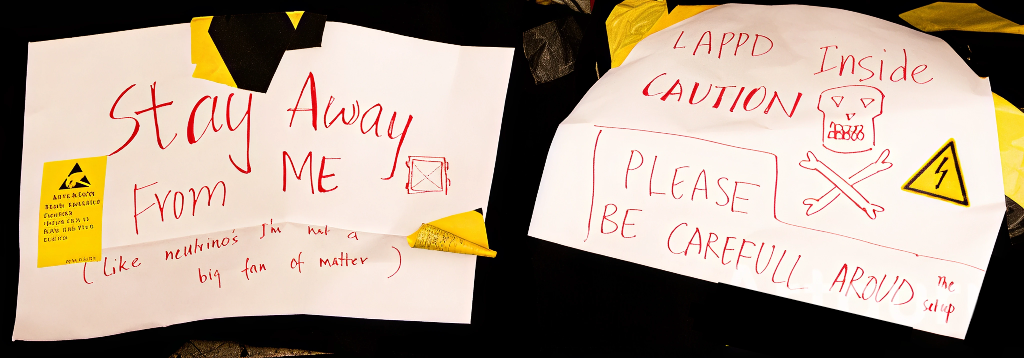
...luckily, viewing them here doesn’t!
WOM Lab
 |
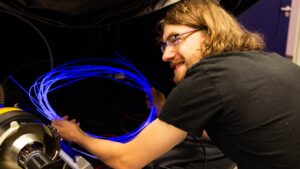 |
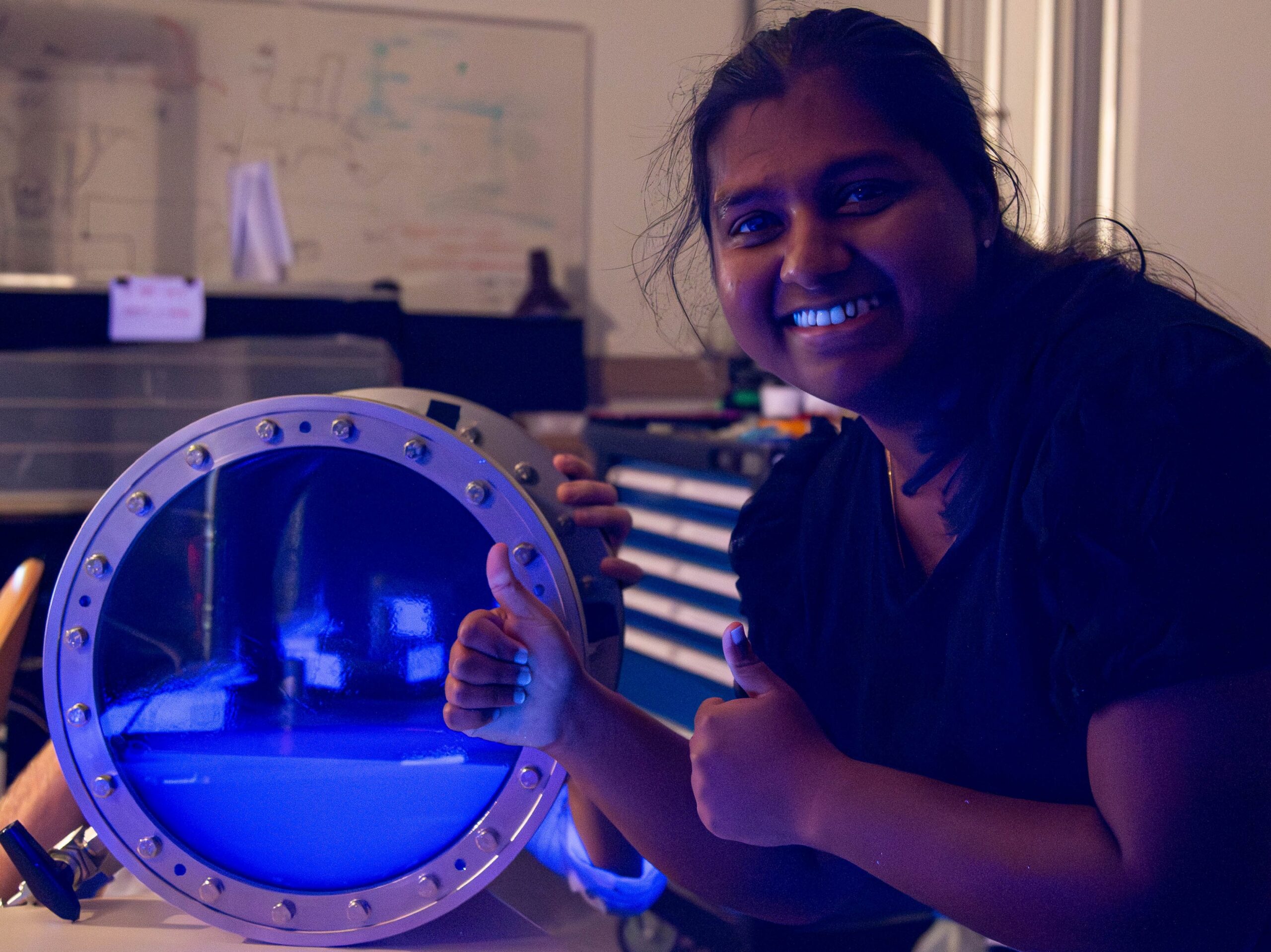
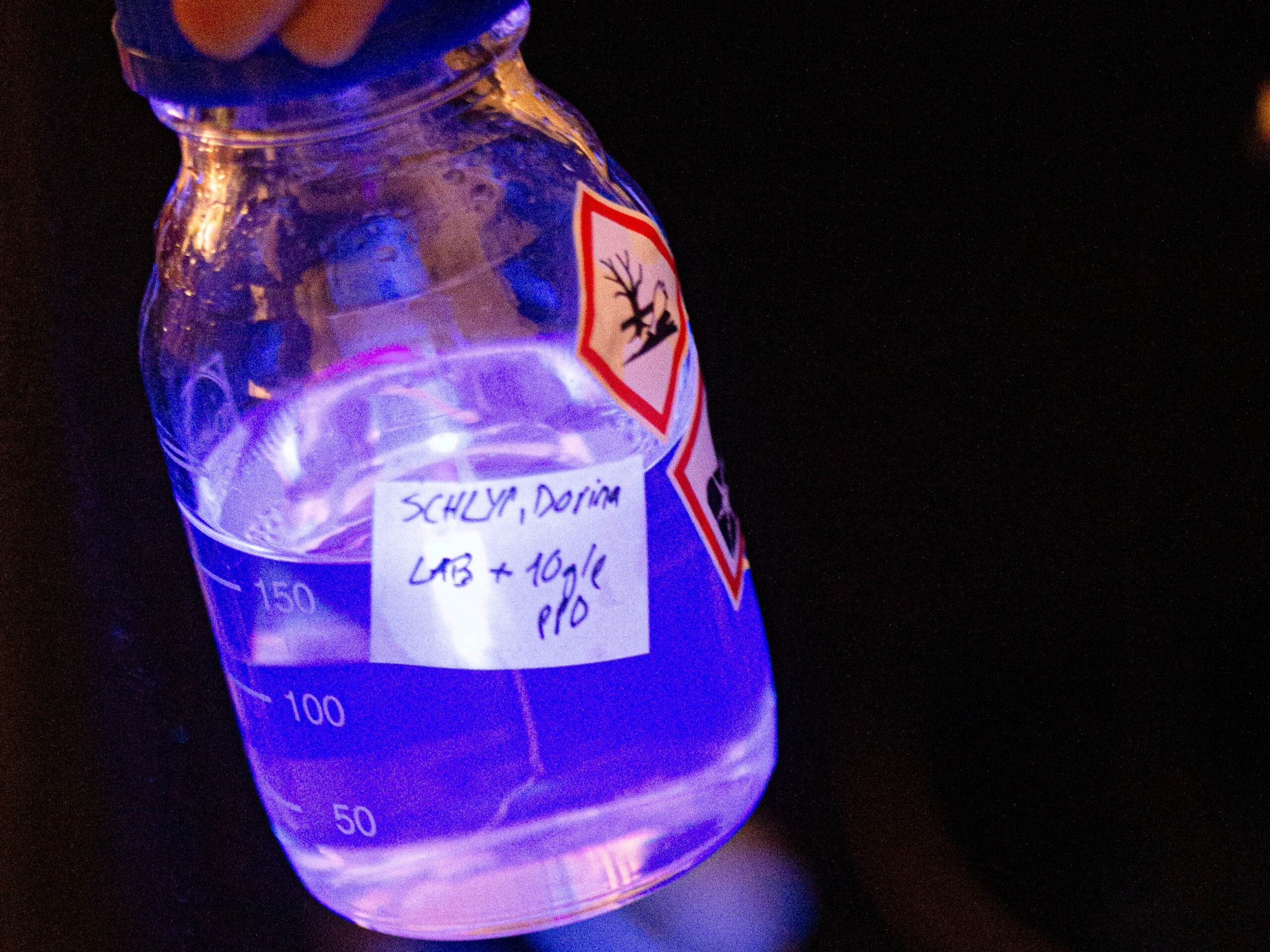
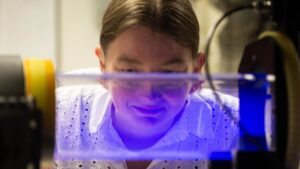
What's glowing here?
An ultra-violet photon hitting a thin layer of photo-active paint on the outside of the quartz tube re-emits light in the visible blue -- a phenomenon known as fluorescence. The fluorescence light is effectively captured by total reflection in the quartz and guided to light sensors at the ends of the tube — a neat trick that is used in many setups across our lab.
Hydrogen Lab
 |
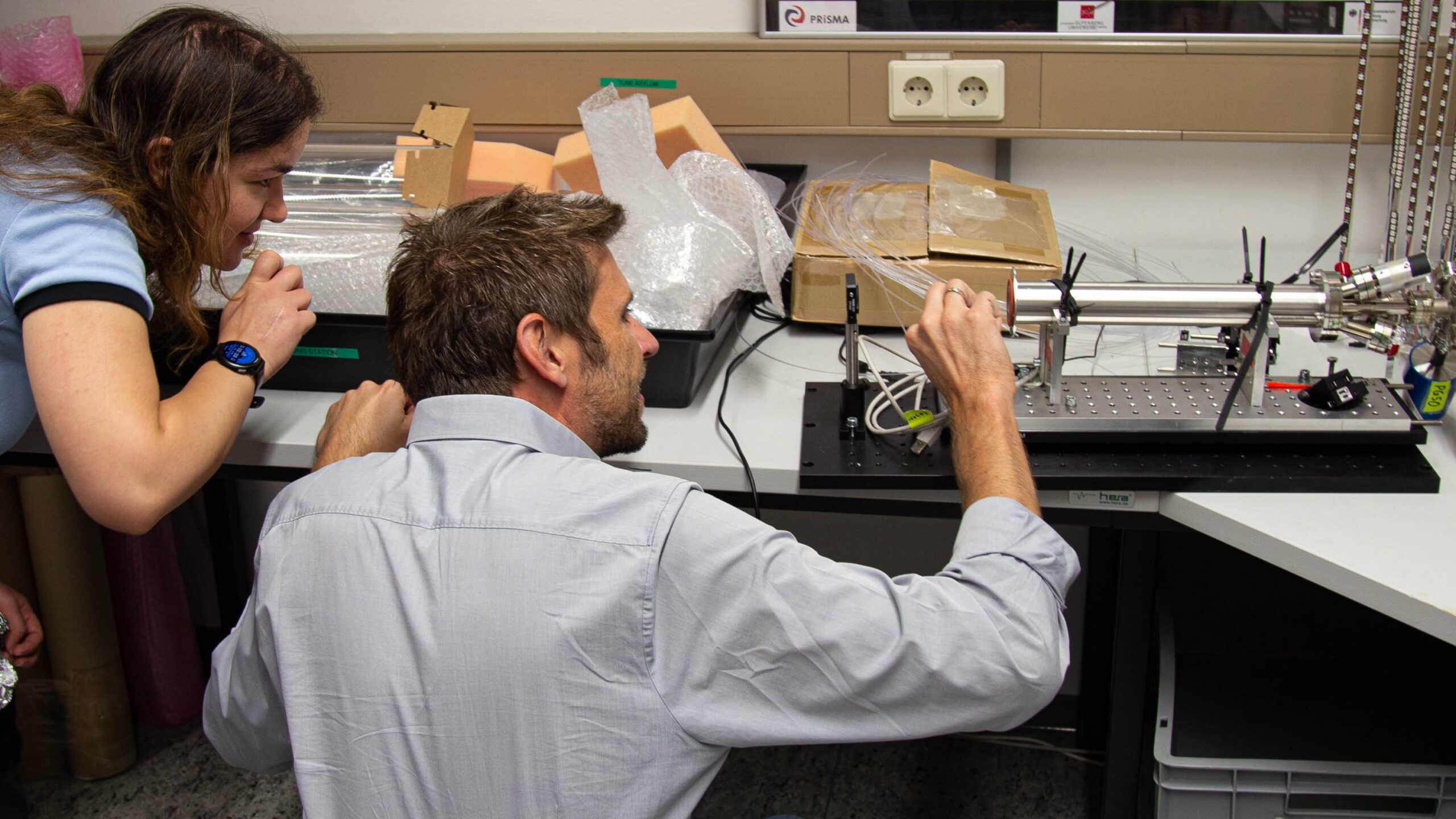 |
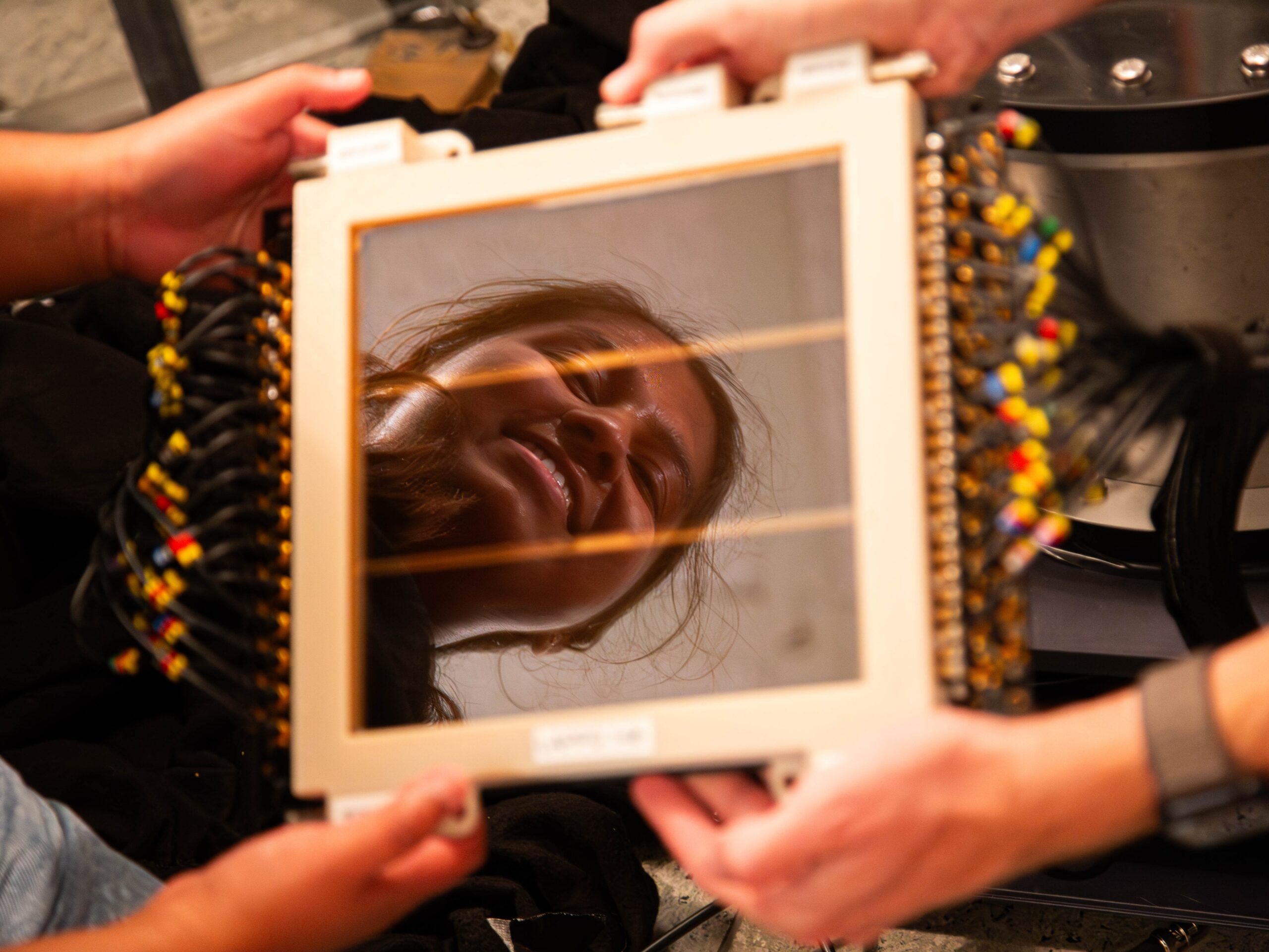
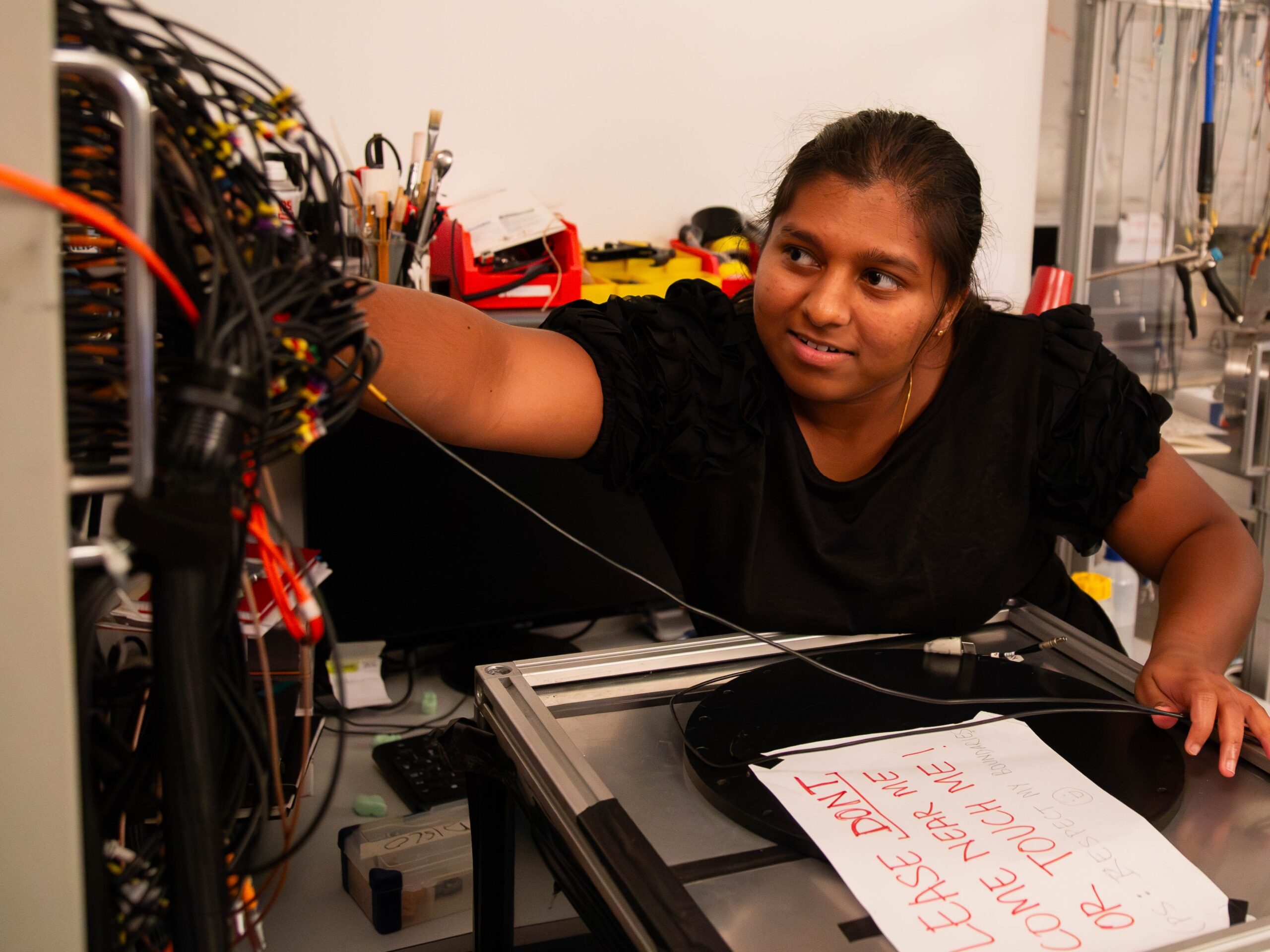
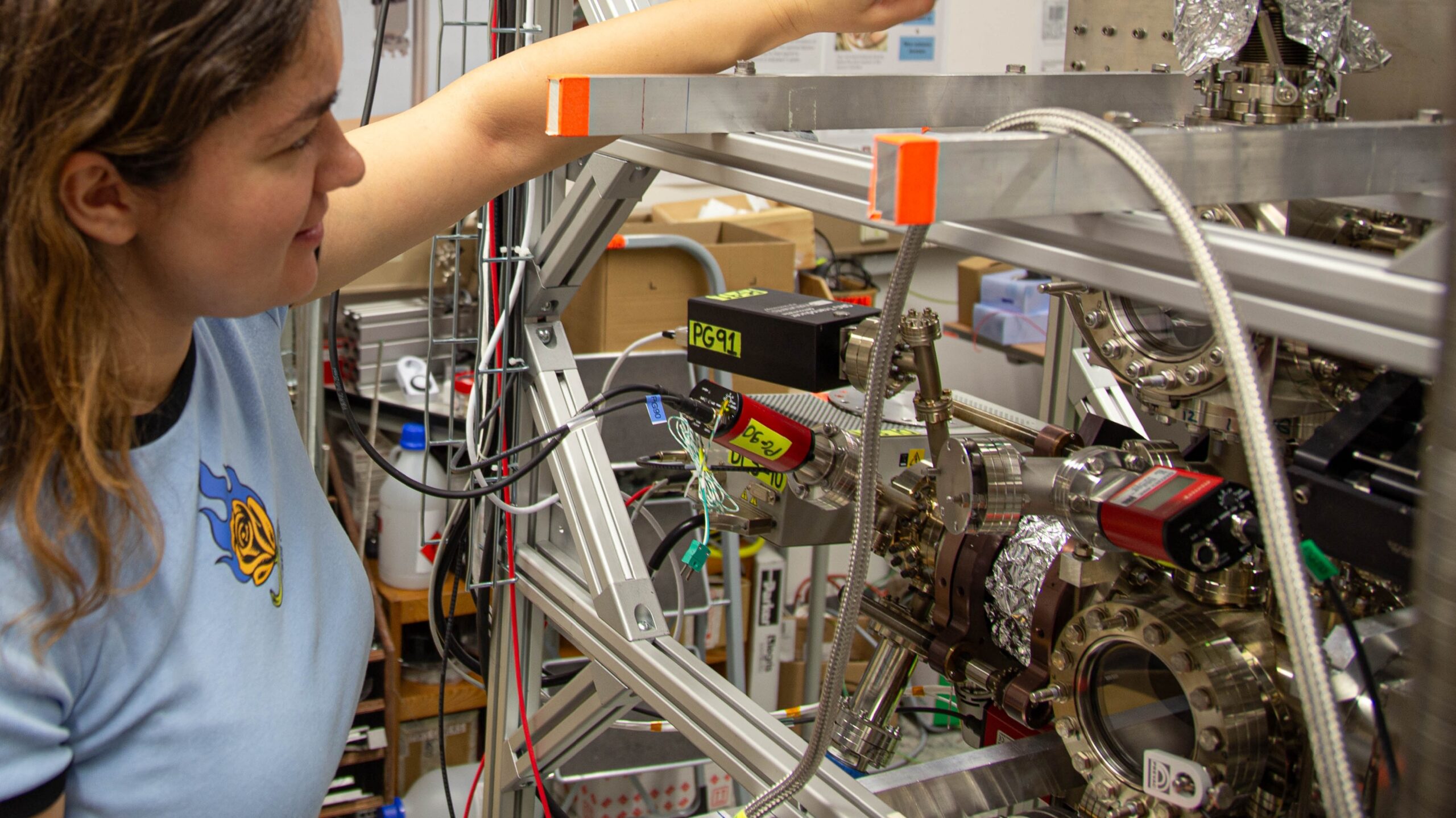
Measuring the neutrino mass would profit from an intense source of radioactive tritium atoms. Since tritium comes in molecules, they have to be cracked in two to be useful. Luckily for me, Bruna is training how to do the cracking with regular hydrogen only, and that does not radiate. The tube on the right guides hydrogen molecules into her setup on the left.
Dark Lab
 |
 |
 |
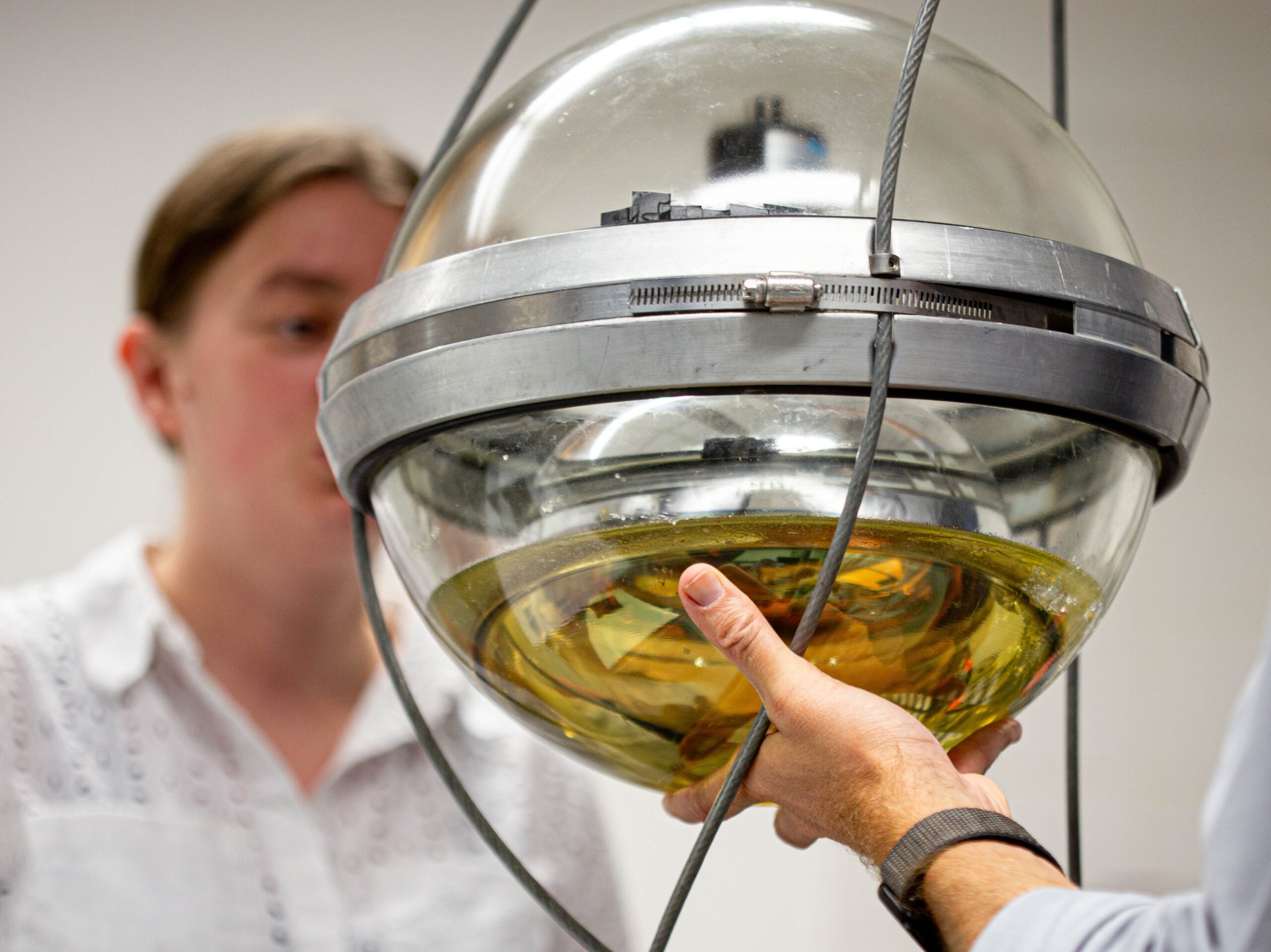
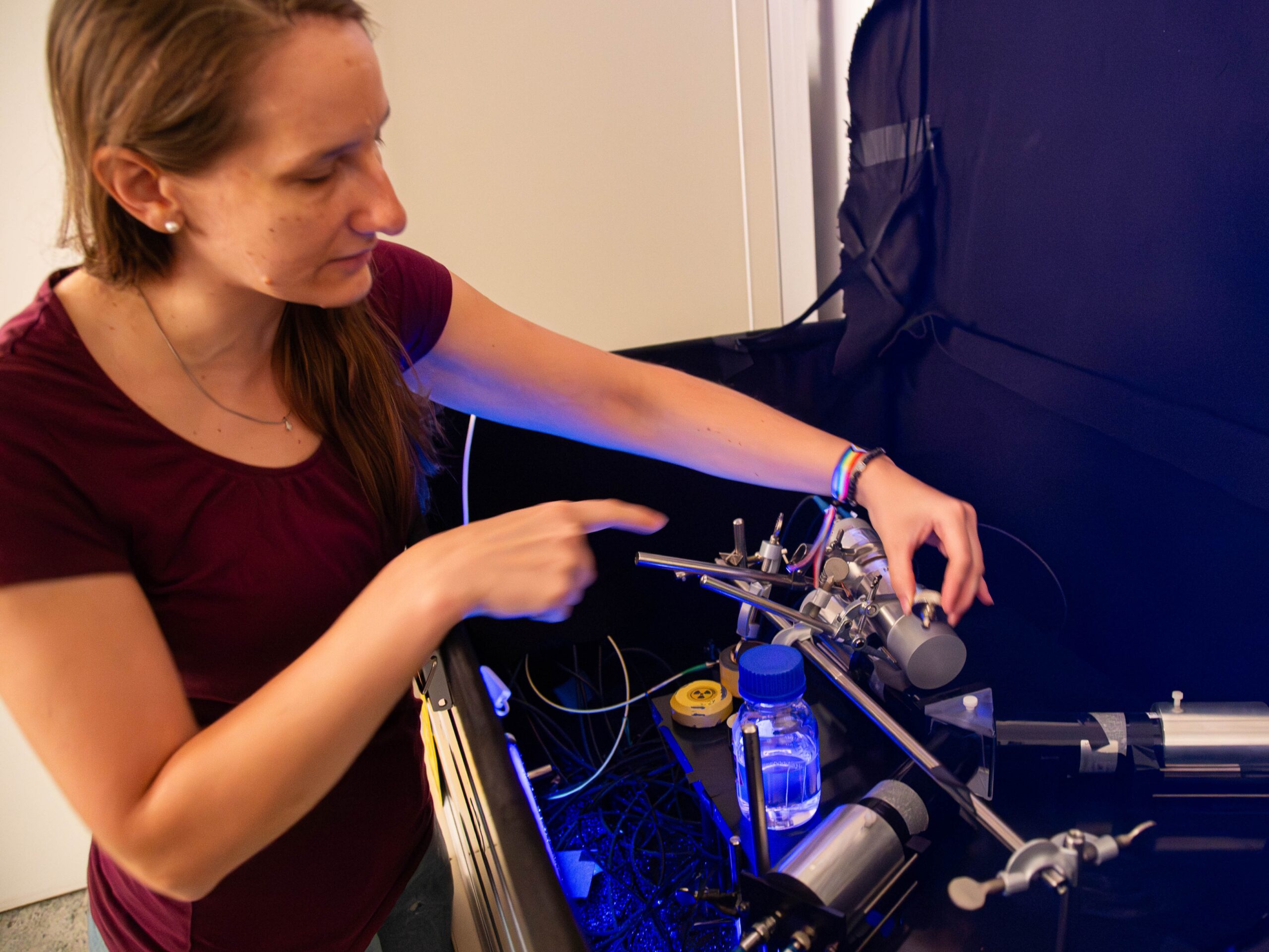
Many of our experiments have to be done in the dark. When hit by particles, scintillating materials produce tiny flashes of light, detected by ultra-sensitive light sensors. These photomultiplier tubes (PMTs) cannot be run in ambient light. Here, Dorina sets up here setup of three PMTs in a Dark Box, surrounding a prism filled with novel water-based scintillator. After switching on the high-voltage, she is able to observe first signals!
Electronics Lab
 |
 |
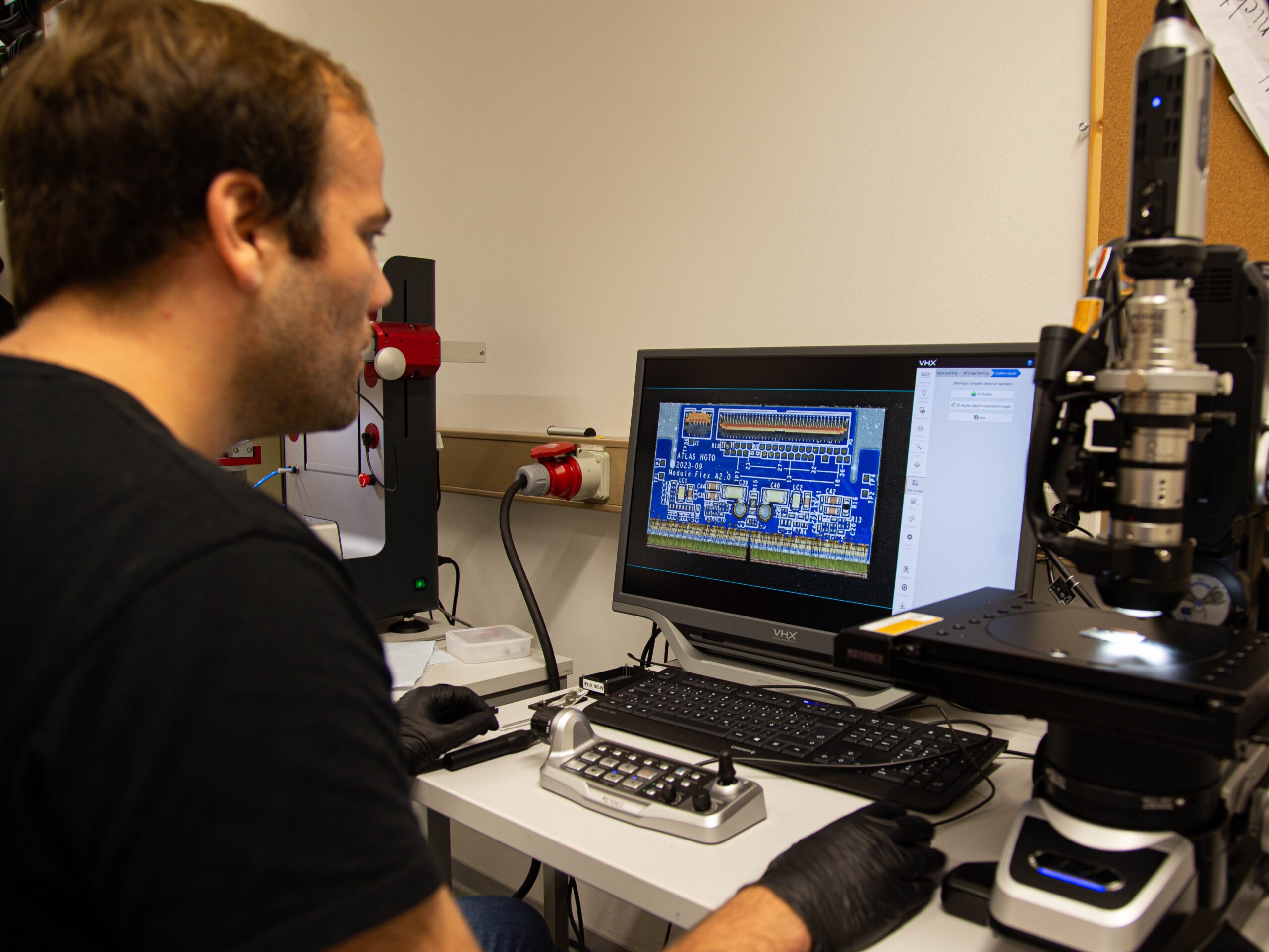
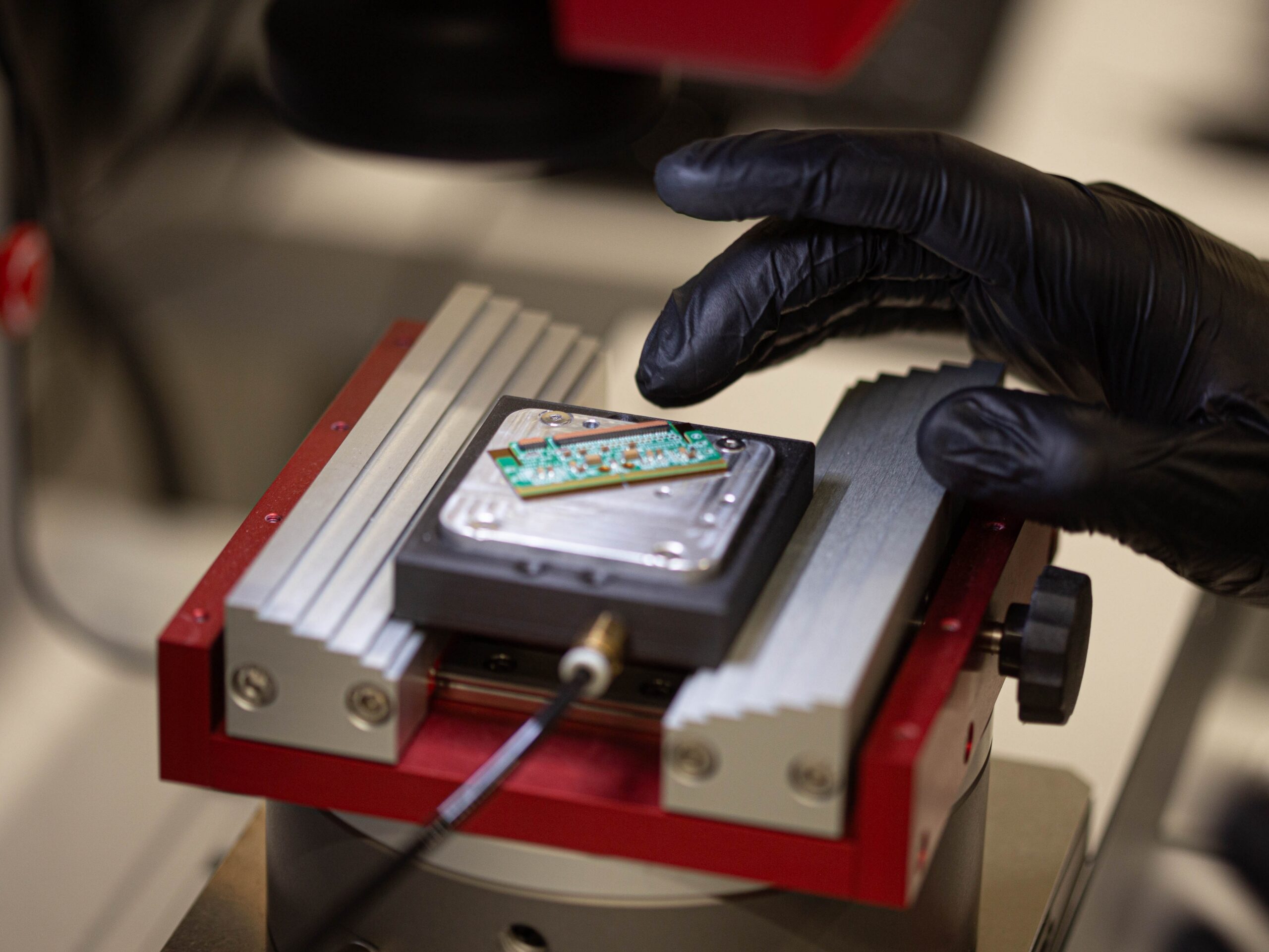
The electronics needed for the latest generation of high-energy particle physics experiments is designed and put together at scientific institutes worldwide. In Mainz, we work on the electronics of the ATLAS High-Granularity Timing Detector to be soon installed at CERN as part of the upcoming LHC High-Lumi Upgrade. Here, Hendrik investigates the tiny bond wires on a new produced circuit board.
Ready to see more? Explore our lab in the pictures below.